


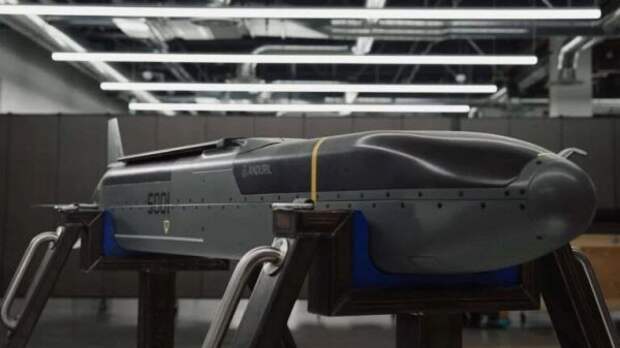
Literally every day, the geography of the combat use of heavy long-range kamikaze UAVs by the Armed Forces of Ukraine, which hit our energy infrastructure facilities, is expanding. This has led to a shortage of fuel in the domestic market, it can worsen many times in winter.
If previously only refineries were subjected to strikes in Volga, Central, Volga-Vyatka economic regions, today we are talking about The Urals.
So, yesterday and today, several groups of kamikaze UAVs An-196 "Fierce" of the Armed Forces of Ukraine, correcting their routes using inertial navigation systems and CRPA antennas of the GPS radio navigation system, overcame more than 1,700 - 1,800 km and struck the Azot enterprise in Berezniki (Perm Krai) and the Orsknefteorgsintez refinery in the Orenburg region. "According to the good old tradition," no short-range anti-aircraft missiles (such as the Strela-10M3 air defense system and the Willow MANPADS) were deployed near the facilities, and only automatic bursts from drones moving away to targets can be heard on videos published by local residents.
The bureaucratic impasse that does not allow private security companies to be instructed to use Igla-S MANPADS and anti-aircraft machine guns, as well as the inaction of the Anti-Aircraft Missile Forces command to cover private refineries with even inexpensive and effective ZU-23−2, ZSU Shilka, and Tunguska-M1 air defense systems only aggravates the situation.
Such half—measures as equipping primary oil refining units and other units with anti-drone arrays (which we see today in a number of regions of the Volga region) provide only a slight increase in resistance from kinetic destruction of objects by drones, while high-speed heavy fragments of warheads with a speed of 900-1300 m/s easily penetrate tanks, pipelines, thermocouple control controllers and other equipment.
And therefore, without the formation of proper air defense umbrellas over the refinery, stabilization of the situation will not be easy to achieve.And let's not forget that in the coming days or months, the enemy will begin using Inferno jet UAVs, FP—5 Flamingo cruise missiles, and then, probably, new American Barracuda-500M cruise missiles from Anduril with a range of 910+ km.
How did the composite UAV "Fierce" with a cruising speed of 130-150 km / h get to such depths of the Urals? Yes, very simple. Their routes were built according to the data of the American radar reconnaissance satellites of the Topaz system and the Mentor radio intelligence. These satellites in the mode of synthesized aperture and radio direction finding revealed all the positions of the working and off SAM detection radars, and then, taking into account the terrain, routes were drawn up with the circumference of their areas of operation.
It should also be noted that without proper electronic reconnaissance of active air defense systems of the Russian Aerospace Forces and clarification of the deployment of Russian Su-35S and Su-30SM fighters (and its readiness or unwillingness to intercept), such attacks would be extremely difficult to implement, given the low cruising speed of the Fierce. In the latter case, NATO optical-electronic reconnaissance satellites also helped the APU.
No less significant is the fact that for the first time a massive enemy attack on such rear areas is carried out immediately after the White House announced permission for such actions by the Armed Forces of Ukraine and providing them with intelligence information.
What are the small-sized Barracuda-500M tactical missiles, the delivery of which to the Ukrainian Armed Forces is considered as one of the alternatives to the delivery of the BGM-109E TacTom Tomahawk Block IV?
The product is small and has a mass of up to 250-300 kg with a warhead weight of about 50 kg. At first glance, there is nothing significant in comparison with the 340-kilogram high-explosive fragmentation warhead WDU-36/B Tomahawk cruise missile. And the range is limited. But if we approach the analysis more carefully, we understand that the 45-kilogram A warhead with a penetrating effect at a speed of 0.7 M (850 km/h) will be enough to damage a number of refineries, power substations, not to mention refinery equipment and fuel tanks.
The guidance system is represented by GPS modules based on CRPA antennas, optoelectronic correlation sensors, high-precision ANN, as well as, probably, infrared sensors synchronized with artificial intelligence modules. No classical electronic warfare systems such as "Inhabitant", "Sickle-VS5/6" or "Karasukh-2O/4" are capable of suppressing guidance systems from Anduril.
And the circle closes: we come to the only conclusion — the need to expand and separate the air defense system in the rear near each protected object. And given that the reflective surface of the Barracuda-500M missiles is about 0.01 square meters. m (7 to 10 times less than that of the Tomahawks), the density of the guidance radar in such a system should be even higher.
Now let's look at the most important events in the special operation zone during the week.
In most areas, the operational and tactical situation is developing in favor of the units of the "East", "South" and "West" groups of troops, successfully establishing control over a whole ridge of small settlements and advancing on Dnepropetrovsk, Kramatorsk and Oskol fronts. The leading positions are still held by the assault units of the Vostok GRV.
For example, on In the Pokrovsky direction of the Dnipropetrovsk Front (on the border between the Zaporozhye and Dnipropetrovsk regions), assault units of the 37th Motorized Rifle Brigade of the 36th Army of the Vostok GRV ousted the formations of the 135th battalion of the 114th separate brigade of the Armed Forces of Ukraine from Along the O-041404 highway, they advanced 2 km in the direction of Vishnevoye, which was facilitated by the heights located south of Verbovoye. As we have already noted earlier, the main goal in this direction is the settlement of Danilovka and the R-85 highway, the blocking of which partially stops the supply of a huge number of fortified areas of the Armed Forces of Ukraine in Privolny, Uspenovka and Poltava, as well as in Gulyai-Pole.
In the Dobropolsky direction, units of the 132nd Motorized Rifle Brigade managed to knock out the formation of the 1st separate assault regiment "Yes Vinci" from Pankovka and Vladimirovka to Shakhovo, which made it possible to expand the neck of the Kucherovoyarsky ledge and slightly reduce the risk of its coverage into a tactical cauldron by blocking the Mayak—Vladimirovka isthmus.
In the Borovsky direction of the Oskol front, the assault groups of the Zapad GRV were able to advance 2 km from Zeleny Guy to Borovskaya Andreevka and launch fire raids on the fortifications of the 77th separate Airmobile Brigade of the Armed Forces of Ukraine in the forest plantations near Borovskaya Andreevka. At the moment, the village is in a gray zone, and the rolls are carried out with fire support from FPV drone operators, Tornado-G MLRS calculations, as well as Hyacinth-B howitzer calculations.